Specialist · stress, breath & the nervous system · Currumbin Valley, Gold Coast

The course, in full

Everything the course actually involves.

The full picture — what you learn, how it runs, what it costs, who teaches it, and the questions people ask before they start. No fluff.

What it is

A proper grounding — not an app, not a one-off class.

This is a practical, evidence-informed way to settle a nervous system that's stuck on high alert — built around Vedic meditation and the breath. Over the course you become self-sufficient in the practice, with a set of stress and breathing tools you keep for life. It's taught by one teacher, in person, in Currumbin Valley on the Gold Coast.

If you've "failed" at meditation before — apps that didn't stick, breathing exercises that took the edge off for an hour — this is deliberately different. You're not being asked to think your way calm. You're learning to bring your nervous system down, and keep it there.

How it works

Four sessions to self-sufficient.

The course is four 90-minute sessions, taught in order over the weekend. Each one builds on the last — by the fourth you can practise on your own, anywhere, and you don't pay again for the support that follows.

1

Session 1: Learning the technique

You receive your personal mantra and learn how to use it. By the end of this first session, you will have experienced your first Vedic Meditation.

2

Session 2: The mechanics of Vedic Meditation

We cover the practicalities of your practice: where you can practise, when you should practise, what correct meditation looks and feels like, and what to expect as the practice develops.

3

Session 3: Understanding stress

A deep dive into how stress affects the body and the mind, and how Vedic Meditation removes the effects of stress by altering the body's chemistry. This session gives your practice a solid scientific foundation.

4

Session 4: The long game

We cover what happens over months and years of practice, how to keep the technique fresh, and how to get the most from it long-term. This session sets you up for a lifetime of practice, not just a good few weeks.

The two ways in

Group, or private.

Same foundation either way. Group is the strong, lasting starting point. If your main aim is to get on top of chronic stress, private is the best option — it's evaluated and tailored around your own physiology.

Small group · one weekend

The group course

$850 · concession from $600

A weekend learning the fundamentals alongside a few others in Currumbin Valley — a strong, lasting foundation you become self-sufficient in.

One-to-one · best for tackling stress

The private course

$1,500

We begin by evaluating your nervous system and your respiratory and cardiac function, then build a program tailored around exactly what we find. One-to-one and far deeper, it's the most direct, targeted way to take on chronic stress — everything shaped around your physiology, not a general method.

Next group dates: 27–28 June · 1–2 August · 5–6 September, in Currumbin Valley. Private courses are scheduled around you.

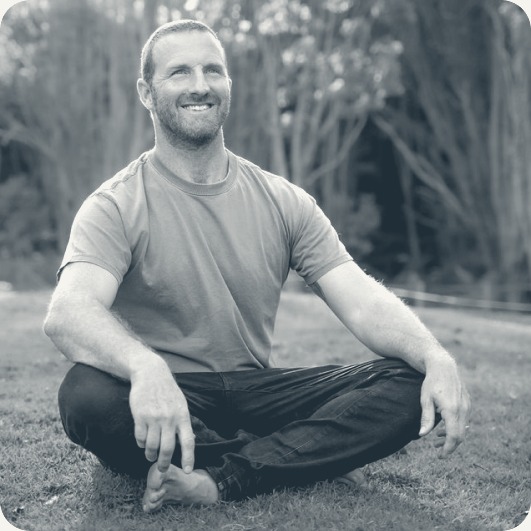
Rich Muir, meditation teacher, Currumbin Valley
Who teaches it

Rich Muir — a specialist, not a wellness brand.

One teacher, with an Honours degree in Psychological Science, a specialised focus on stress, the breath and the autonomic nervous system, and over twenty years of his own practice behind it. Rich wrote his Honours thesis on stress and our breathing patterns — so the breath isn't a footnote here, it's central.

For the past eight years he's taught more than 500 people on the Gold Coast to do one thing: bring their nervous system down, and keep it there. Professionals, parents, shift-workers, first responders — many arrived certain they "couldn't switch their brain off." They were often the ones it helped most.

20+ yrsOwn practice
8 yrsTeaching
500+People taught
BSc HonsPsychology
The evidence

This isn't woo. It's measurable.

2–5×

Deeper rest than sleep

During the practice the body enters physiological rest measured 2–5 times deeper than sleep — reduced oxygen consumption and metabolic rate.

— Wallace, in Science & the American Journal of Physiology

87%

Fewer CV hospitalisations

A study of 2,000 practitioners vs 600,000 controls found an 87% reduction in cardiovascular hospitalisation, and 56% across all major disease categories.

— Orme-Johnson, Psychosomatic Medicine, peer-reviewed

Before you start

Questions people usually ask.

Do I need any experience?
None at all. Plenty of people arrive certain they "can't switch their brain off" — they're often the ones it helps most. You don't need to be flexible, spiritual, or any good at sitting still.
How much time does it take — to learn, and after?
The course is four 90-minute sessions. After that you're self-sufficient and practise on your own — twenty minutes, twice a day, typically morning and evening.
Group or private — which should I choose?
Group is a strong, lasting foundation, learned over a weekend alongside a few others. Private goes far deeper — we evaluate your nervous system and your respiratory and cardiac function, then tailor the program around it, which makes it the best option if your main aim is to get on top of chronic stress. Not sure? Take the 2-minute assessment or book a free call and we'll work it out together.
What does it cost?
$850 for the group course (concession from $600), or $1,500 for the private course. Ongoing support and monthly group sits are included at no extra cost.
Where and when is it held?
In Currumbin Valley, on the Gold Coast. The next group weekends are 27–28 June · 1–2 August · 5–6 September. Private courses are scheduled around you.
What if it turns out not to be right for me?
I'll tell you. The first step is a free 20-minute call — no pressure, no pitch. If I'm not the right fit, I'll say so, and point you somewhere better. You're in good hands either way.

No pressure, no pitch

The first step is just a conversation.

Twenty minutes to tell me what's going on and find out whether I can help. It costs nothing and commits you to nothing.

Book your free call